
The Magician Who Vanished Into The CIA: John Mulholland’s Dual Life
A conjurer for all seasons…
John Mulholland, born John Wickizer in Chicago on June 9 1898, fell in love with magic at an early age. A performance by the legendary Harry Kellar captivated him when he was five, and after his family moved to New York he began taking lessons from John William Sargent — president of the Society of American Magicians and one‑time secretary to Harry Houdini. Mulholland debuted as a performer at fifteen and quickly became known for combining showmanship with scholarship. He worked as a schoolteacher and bookseller while performing on the side, but by the 1920s he was touring full time. His stage repertoire ranged from intimate close‑up tricks to elaborate theatre shows, and in 1927 he introduced the “magician as lecturer” by illustrating a program on magicians from around the world with tricks from each culture.
Mulholland soon became one of America’s most respected magicians. He performed in forty‑two countries, wrote a dozen books on magic and presented his 90‑minute show from two suitcases. He served as consulting magician to Encyclopædia Britannica and Merriam‑Webster and was the only magician listed in Who’s Who in America. During the 1930s he took over the influential magic journal The Sphinx and edited it for 23 years. Mulholland’s performances were particularly popular on college campuses; he joked that it was “far simpler to fool an audience of Princeton undergraduates than a kindergarten class” because clever adults misdirect themselves. He styled himself as a conjurer for intellectuals — delivering his lectures on “Magic of the World” or “The Science of Soothsaying” in a three‑piece suit and pocket watch. His association with Princeton and other universities burnished his brand as “the Dean of Magicians”.
Mulholland’s war‑time contributions extended beyond entertainment. Houdini had hired him as a teenager to help expose fraudulent psychics, leading to decades of cooperation with law‑enforcement agencies. During the Second World War he gave anti‑Nazi lectures titled “Unmasking Propaganda Through Magic” and published a pocket‑size book of magic tricks for U.S. troops. His 1944 book The Art of Illusion: Magic for Men To Do proved so popular that nearly 100,000 Armed Services Edition copies were printed for soldiers. Mulholland even performed at the White House eight times.
Disappearing act
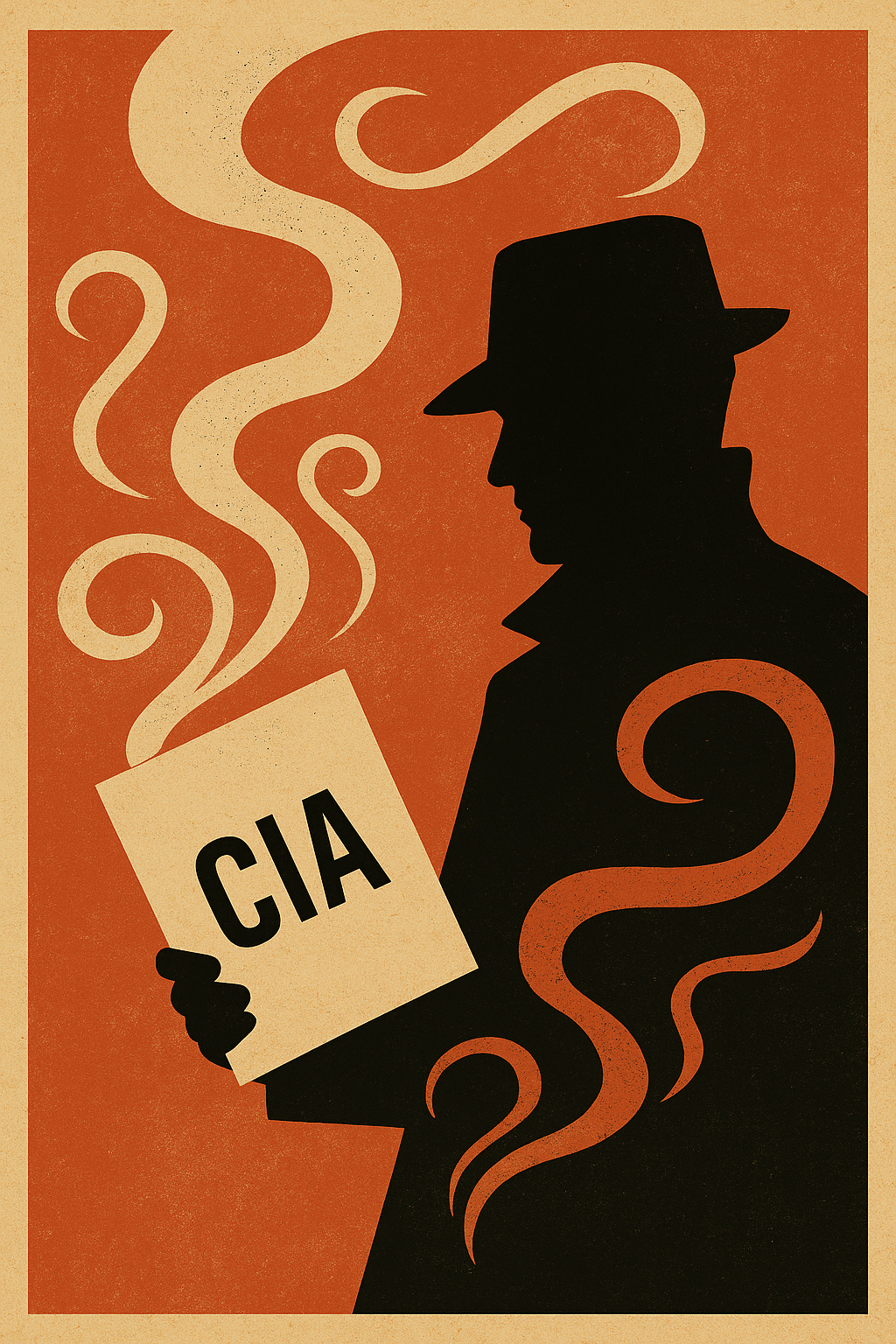
In June 1953 Mulholland shocked the magic community when he announced that The Sphinx would cease publication due to his poor health. While his ulcers and arthritis were real, the illness was a cover: the newly-formed Central Intelligence Agency had quietly recruited him to assist them in their development of deceptive practices and subterfuge. At the height of the Cold War, U.S. intelligence leaders feared Soviet “brainwashing” techniques and sought unconventional tools. Sidney Gottlieb, chief of the CIA’s Technical Services Staff, believed that a professional magician could help agents learn sleight‑of‑hand, misdirection and psychological manipulation. Mulholland therefore left the public stage and began working under a CIA contract for Project MK‑ULTRA, the Agency’s controversial mind‑control program.
Mulholland’s first assignment was to write a clandestine training manual. He produced Some Operational Applications of the Art of Deception and a companion booklet, Recognition Signals, in 1953–54. The CIA wanted instructions that looked like a magic text but taught agents how to do dangerous things in the field. According to CIA historian Robert Wallace, the manual covered “sleight‑of‑hand brush passes” for secretly exchanging objects, hiding assets in vehicles that resembled stage illusion boxes and smuggling items out of East Germany. Mulholland’s manual described how to administer pills, liquids and powders undetectably, pick up small objects unnoticed and design team routines for female agents. The instructions used friendly language but were intended to help spies deliver mind‑altering drugs, poisons and biological agents. He taught that any movement could be concealed if onlookers could explain it, and advised inventing an ordinary scapegoat with one unusual characteristic (such as a missing finger) to misdirect suspicion.
Mulholland continued to advise the CIA for several years. By 1954 his contract expanded to include designing devices for covert delivery of materials and later to devising covert communication techniques, where he applied the methods of magicians and mind‑readers to develop non‑electronic signaling systems. A 1956 memo lists his services: surreptitious delivery of materials, deceptive movements to conceal prohibited actions, influencing choices and perceptions, disguises and covert signaling. CIA records show Mulholland submitted invoices until February 1958, after which his declining health appears to have ended the collaboration.
Legacy and resurfacing of the magic manuals
Mulholland never again attained his pre‑war celebrity. His post‑CIA years were spent quietly; he died in New York City in 1970. For decades the CIA manuals were believed destroyed, as most MK‑ULTRA files were shredded in 1973. In the mid‑2000s, intelligence historian Keith Melton and former CIA Technical Services chief Robert Wallace discovered surviving copies and published them as The Official CIA Manual of Trickery and Deception. The book contains Mulholland’s original text and diagrams, revealing how a stage magician’s craft was repurposed for espionage.
Reflection: why the deception mattered
John Mulholland’s career illustrates the unexpected intersections between performance and espionage. On stage he taught audiences that the mind, not the hand, is the true site of magic; in Langley he taught spies that the same principles apply in clandestine operations. His work for the CIA shows how fundamental misdirection, psychology and storytelling are to both magic and covert tradecraft. From teaching Princeton students and White House guests to secretly briefing CIA officers and developing agency protocols, Mulholland blurred the line between entertainment and deception. His manuals remain a reminder that during the Cold War, even a book on “magic tricks” could conceal a spy’s most prized secrets.

John Mulholland; The Magician Who Came In From The Cold